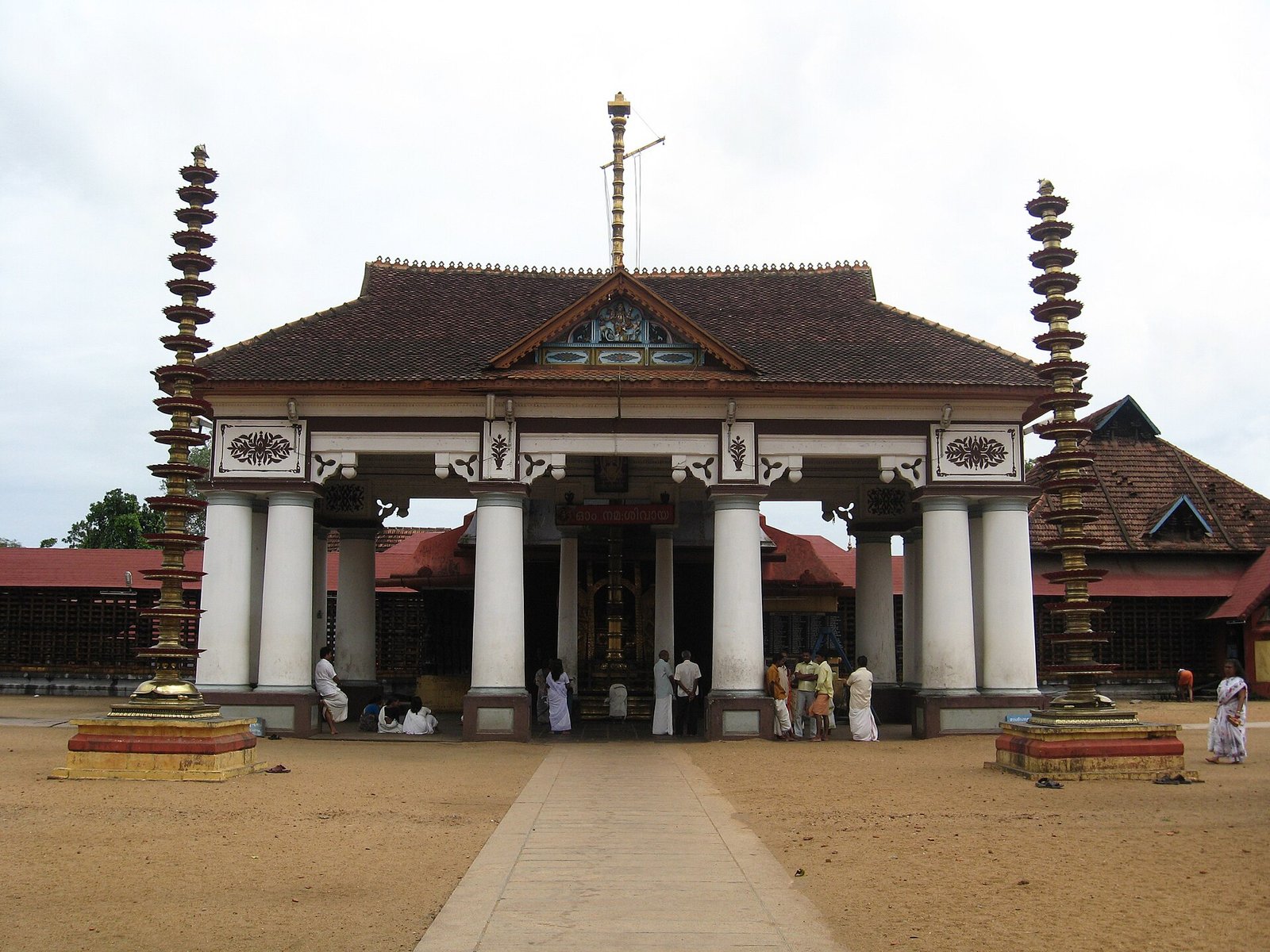
Place: Vaikom, Kottayam
Main deity: Shiva, affectionately called Vaikkathappan
Known for: Vaikathashtami and the history of the surrounding roads
Vaikom invites two kinds of attention. One concerns worship and the stories told about Shiva. The other concerns the people who struggled for dignity in the streets around the temple. Understanding both gives a visit greater depth.
Who is Vaikkathappan?
The main deity is Shiva, lovingly addressed as Vaikkathappan. Vaikathashtami is an important festival associated with the shrine.
Devotional names often carry a feeling of closeness. They place the deity within a community’s everyday speech. Ask an older relative how they first heard the name Vaikkathappan; the answer may open a family memory that a travel guide cannot provide.
Vyaghrapada’s prayer
The festival account relates a tradition in which the sage Vyaghrapada performs prolonged worship and receives a vision of Shiva and Parvati. Vaikathashtami is associated with remembering that event. It is a sacred narrative, rather than an event for which this article claims a verified historical date.
A present-day reflection might concern constancy: returning to a worthwhile practice even when there is no immediate reward. That could be keeping a promise, setting aside time for an older parent or continuing a task that benefits others. The connection is an interpretation for reflection, not a claim that persistence guarantees a divine appearance.
The history must also be remembered
The Vaikom Satyagraha of 1924–1925 challenged caste-based restrictions on roads around the temple.
It would be misleading to say simply that this campaign immediately opened every temple to everyone. It would be equally incomplete to describe Vaikom only through festivals while leaving out the struggle against exclusion.
For a family discussion, the practical question is direct: who is still being made to feel unwelcome in spaces we control? At home, work or a community event, inclusion is tested in ordinary behaviour—who gets heard, who is served and whose inconvenience is dismissed.
Visit with both stories in mind
Confirm current entry arrangements and festival programmes before travel. Allow time to notice the temple’s surroundings as well as the shrine. A respectful visit can hold devotion and historical honesty together.
You do not have to turn a family outing into a lecture. One carefully told story about Vyaghrapada and one accurate account of the Satyagraha can be enough to begin a meaningful conversation about faith, patience and equal dignity.