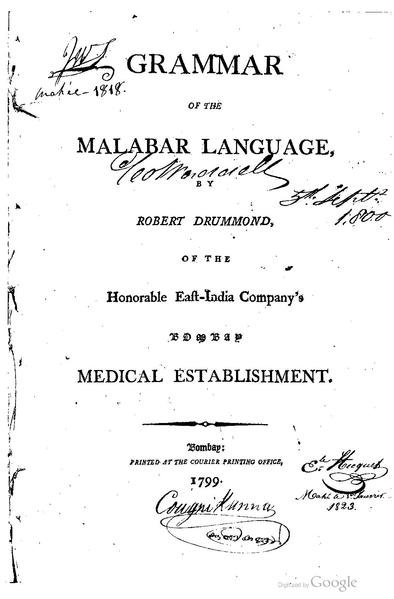
An old astronomical text asks its reader to do more than admire the past. It asks for careful attention: to a number, a unit, the meaning of a technical word and the way one instruction follows another. A manuscript may look remote from a modern calculation screen, but both depend on the same basic discipline—recording the assumptions clearly enough that another person can follow the work.
Kerala’s astronomical heritage is particularly interesting because it brings mathematical methods, teaching and practical calculation into the same story. It is worth exploring on its own terms. The history becomes less useful when every achievement is turned into a slogan or when all older writing is treated as a single, unchanging system.
Why manuscripts need context
A palm-leaf manuscript is a physical witness to transmission. It does not automatically tell us when a work was first composed, whether a passage was copied accurately or how a later teacher explained it. The author of a work, the person who copied a surviving manuscript and the editor who prepared a printed edition may be separated by centuries.
When you encounter a translated passage, look for the title, the named author where known, the edition and the translator. If a modern explanation is added alongside the older text, keep the two distinct. This simple habit prevents a recent opinion from being mistaken for an ancient quotation.
Kerala’s school of mathematical astronomy
Research on the Kerala school examines sophisticated methods associated with figures such as Madhava and Nilakantha Somayaji. One recent study discusses several methods for computing the inverse sine in Nilakantha’s Tantrasangraha and their relationship to earlier work. Another analyses Madhava’s correction terms in a series for pi. These are specific mathematical achievements that can be studied through procedures and arguments, rather than vague claims about hidden knowledge. See the research papers on inverse-sine computation and Madhava’s correction terms.
For a reader without advanced mathematics, the important point is the willingness to refine a calculation. A useful approximation can be improved; a method can be explained; a result can be compared with another result. That is a richer historical picture than the idea that knowledge arrived complete and never required revision.
Astronomy, calendars and interpretation
In a horoscope report, several kinds of work appear together. Astronomical calculation supplies positions. A calendar system labels a day, lunar phase or other interval. Astrological interpretation assigns traditional meanings to selected relationships. Their proximity on a page does not make them interchangeable.
A more accurate planetary table improves the numerical foundation of a chart. It does not, by itself, establish that a statement about career or marriage will come true. Appreciating historical astronomy therefore does not require accepting every predictive claim made in its name. Nor does questioning a prediction erase the intellectual value of the mathematics.
What changes when the work moves to software?
Software makes repetition easier. It can apply the same calculation to many dates, compare alternative settings and present tables in a readable form. Yet speed does not remove the need to choose a convention. Ayanamsa, time-zone handling and the definition of a house still matter.
The best use of a digital report is to make those choices understandable. If a birth time is uncertain, a polished chart should not hide that uncertainty. If two systems divide the chart differently, their results should be labelled rather than silently combined. A clear explanation is part of the calculation’s usefulness.
Building your own reading list
Begin with one well-identified text or research article and keep a notebook of terms. Separate a question about chronology from a question about mathematics, and both from a question about religious practice. When a claim sounds unusually dramatic, follow the citation back to the work it names.
Libraries, scholarly editions and research papers serve different purposes. A manuscript catalogue helps locate a witness to a text; a critical edition helps compare readings; a modern study explains a particular problem. Reading across these forms is more productive than collecting many files without knowing what each contains.
OlaMatch takes its name from ola, the palm leaf. For us, the useful connection is careful recording and readable explanation. The heritage deserves curiosity and precision, whether you approach it as a family tradition, a history of ideas or an invitation to learn more mathematics.